
Tecnifibre
Tube of 3
Balldose 3 Bälle Tecnifibre Padel Team
5 offers from €3.48+ €14.95 shipping
Enter code OURPRIME at checkout
· Padel Nuestro
 PadelStand
The ball determines pace and bounce – and it's the consumable that wears out fastest.
Today from €3.48 per tube (€1.16 per ball) · in a 24-tube case from €3.73 per tube · prices as of 14/11/2026

Pressurised ball with balanced pace and a controllable bounce.

The faster version of the Pro Bounce – more dynamic off the bounce.

Pressurised ball with lively pace and a dynamic bounce.

The controlled variant of the Speed – predictable behaviour instead of pace.

Bargain pick: a solid own-brand ball for training.

Bullpadel's proven competition ball – holds its pressure and is fairly priced.

Wilson's cheap all-round ball for training and casual matches.

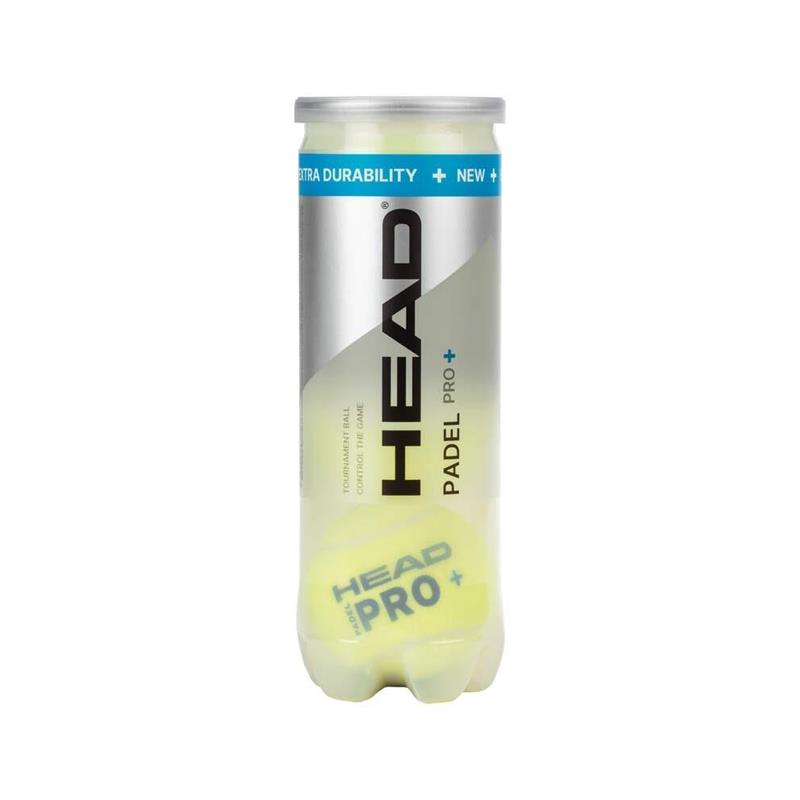
Head's all-round ball for training and matches.

Siux's competition ball – punchy, with durable felt.


Deliberately slower ball – gives you more reaction time and makes long rallies easier.

Pressurised ball for training and matches with easily controllable behaviour.

The livelier version of the Elite range – dynamic bounce.

Nox's best-known ball – lively and durable.

Official ball of the A1 Padel Tour, FIP-approved – lively and hard-wearing.

Fast tournament ball with a strong bounce – Head's competition version.

Bullpadel's newer ball generation in the Pro version.

Adidas's competition ball – fast and lively, made to go with the RX line.

Cheap training ball from Babolat – solid quality at a small price.


The official ball of the Premier Padel tour in the fast Speed version.

The official Premier Padel ball – the benchmark for matches.
31 items found
Affiliate links (ads). We only compare partner shops – other shops may be cheaper.
Last updated: November 2026 · How we rate
Padel balls look like tennis balls and have slightly lower internal pressure. That produces the lower, more controllable bounce padel is played with – one of the differences we cover in more detail in Padel vs tennis compared. A tennis ball on a padel court bounces too high and makes play off the walls unpredictable.
The pressure drops faster than the felt wears out. In training, two to three hours of play is realistic; in matches, balls are often changed after just one set. An opened tube also loses pressure even if the balls aren't played – keeping it for next season isn't worth it. Tournament balls keep their pressure constant for longer and bounce evenly across the whole tube; for training a cheap ball is enough, because it goes soft faster than it wears out anyway.
On 14/11/2026 the cheapest tube cost €3.48, for example Balldose 3 Bälle Tecnifibre Padel Team, Enebe Pro Bounce or Enebe Pro Bounce S – that's €1.16 per ball. In a carton of 24, the Balldose 3 Bälle Tecnifibre Padel Team costs €3.73 per tube, i.e. €1.24 per ball. Half of the 31 balls in our comparison cost no more than €4.41 per tube.
Not always: for 10 of the 20 balls that also come by the carton, a tube from the carton is cheaper than a single one, by 6% on average. On top of that, you only pay shipping once. The quantity calculator on every ball page works out, shipping included, from how many tubes a carton pays off.
Two to three hours of play in training; in matches they're often changed after just one set. The pressure drops faster than the felt wears – so a ball can be played out even though it still looks new.
It depends on what you use it for. For matches, a tournament ball that holds its pressure longer is worth it – such as the Wilson Premier Padel X3 (official ball of the Premier Padel tour), the Nox Nerbo (official ball of the A1 Padel tour) or the Head Padel Pro S+ for a fast game. For training, cheap balls such as the Wilson Padel X3 or the Babolat Court Padel X3 are enough, because every ball loses pressure after a few hours of play anyway.
Three – that's the standard padel tube. A few manufacturers also sell tubes of four. A carton usually contains 24 tubes, i.e. 72 balls.
For matches, yes: tournament balls keep their pressure constant for longer and bounce evenly across the whole tube. For training a cheap ball is enough.
Padel balls have slightly lower internal pressure. That gives the lower bounce on which the game off the walls is built. Tennis balls bounce too high on a padel court.
Unopened and away from heat – the tube keeps the pressure in, a car in summer works against it. Once opened, a tube loses pressure even if the balls aren't played, so it should be used up fairly soon.
The best overgrip is little use on the wrong racket. Our Finder suggests the right model for you in a minute.
Start the Racket Finder →By player type & feature