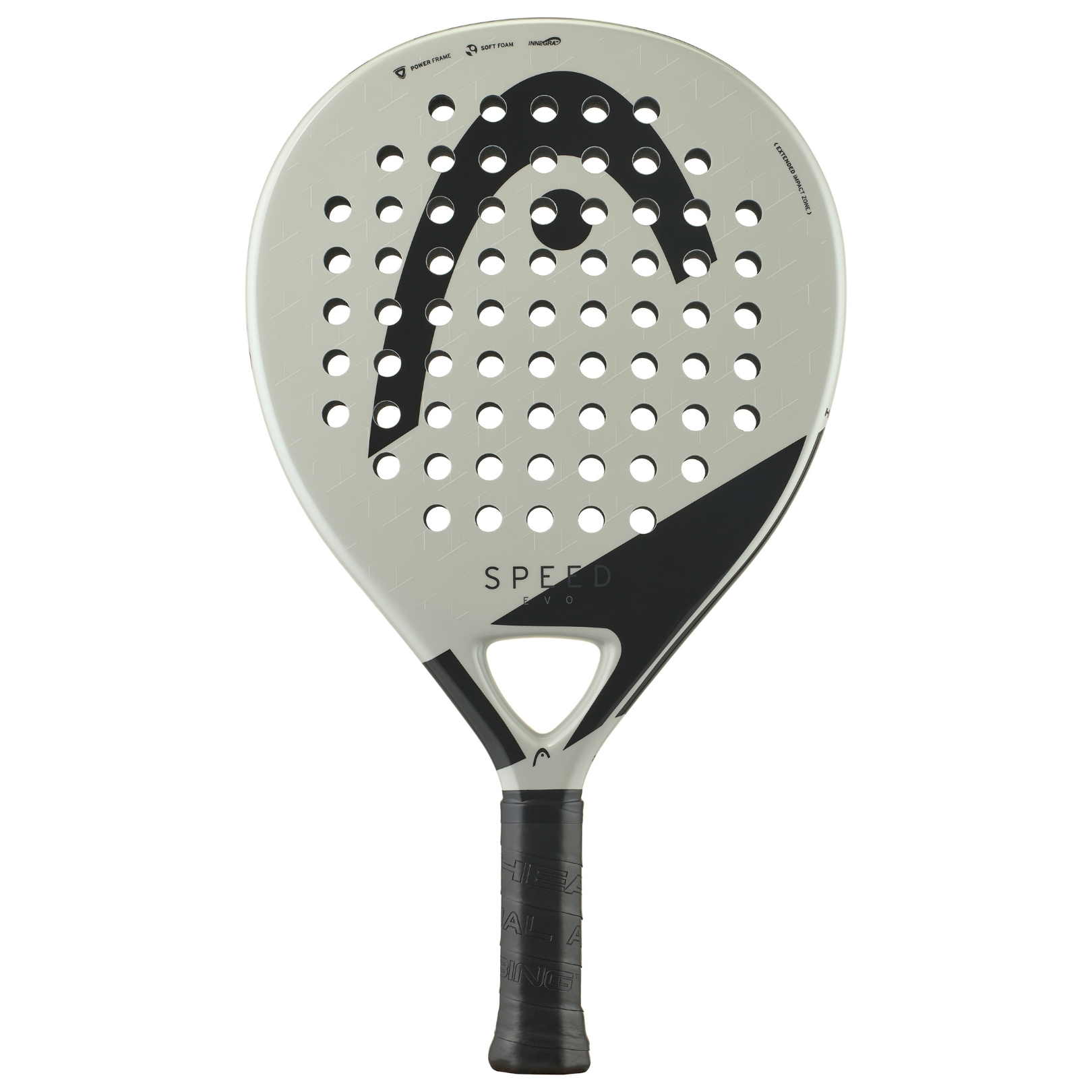
Head Radical Pro 2026
A tactical control all-rounder: very easy to handle despite 370 g thanks to low balance.
- 370 g
- Soft
- Intermediate
Last measured · as of 14.11.
Measured daily across 21 shops: products at their lowest price since we started tracking, plus models well below their usual price of the last 30 days.
Affiliate links (ads). We only compare partner shops – other shops may be cheaper.
No deal currently matches these filters. or search the whole catalogue →
All-time low means: as cheap as it has ever been since we started tracking the product. −x % means: that far below the usual price of the last 30 days. Each product appears only once here – with the stronger reason.

A tactical control all-rounder: very easy to handle despite 370 g thanks to low balance.

The comfortable Team version of the Coello range: a diamond with a fibreglass trampoline effect and Auxetic 2.0.

The attacking variant of the Genius series: diamond, high balance and aluminised 18K carbon, plus a handle extended by 30 mm for two-handed shots.

Tino Libaak's Diablo Pro: a teardrop with 24K Textreme carbon and a dry, controlled touch.

The lightest Genius: 350 to 360 grams, soft HR3 White EVA core and aluminised 12K Xtrem carbon in teardrop shape.

Aranzazu Osoro's round control racket with 12K carbon and an MLD Black EVA core – for 2027 with the VCS anti-vibration system.

The lightest Ventus: 350 to 360 grams, teardrop shape and 12K carbon, new with the VCS anti-vibration system.

Edu Alonso's teardrop with 12K Xtrem carbon and MLD Black EVA core – for 2027 with a redrawn frame and the VCS anti-vibration system.

Aimar Goñi's attacking diamond: high balance, a handle 30 mm longer and 12K Xtrem carbon, now with the VCS anti-vibration system.

Miguel Lamperti's control racket with 3K carbon: round, and for 2027 with a high-density HR3 Black EVA core and the VCS anti-vibration system.

Diamond with aluminised 12K Xtrem carbon and extended handle – in 2027 with MLD Black EVA core instead of HR3 and the VCS anti-vibration system.

Round counter-attacking racket with 3K carbon and head-heavy balance: control from defence, pressure on the counter-attack.

Light round defensive racket with a very soft core.

A round control racket with a fibreglass face and a soft Soft Performance core: a comfortable mid-range all-rounder.

Round control racket with an HR3 Hard EVA core and 3K fibreglass – firm ball feel, plenty of guidance, built for learning.

Chingotto's control racket, in 2027 with a new core and a frame reinforcement called PrismLock.

Attacking diamond with a Carbon Flex face: power with a little more ball feel than the Viper.

Diamond-shaped attacking racket with high balance: 360 grams, medium-hard EVA core and rough carbon faces.

The classic Pro Cup teardrop with an HR3 Hard EVA core and aluminised fibreglass – balanced, with an Exclusive Spin surface.

The continuation of the RX beginner range: round, soft, low balance: uncomplicated and forgiving.

Sanyo Gutiérrez's all-rounder: hybrid shape, medium balance, 18K Carbon Hybrid over a medium-hard M-EVA core.

The Xplo shape with a Fibrix face: softer on contact and more forgiving, with only a little less punch.

A featherlight beginner version of the Drive: soft, forgiving and affordable.

The angular Neuron variant – Bullpadel calls the profile “Crystal Edge”, plus PrismLock in the frame.

Teardrop shape with low balance, 3K carbon and a soft EVA Soft core – designed for control, with a damped feel.

Versatile teardrop with medium balance, 3K carbon faces and a medium-hardness EVA core – well balanced in its set-up, but on the heavy side at 368 g.

Teardrop shape with medium balance, a 3K carbon face and an EVA Soft core – a comfort-oriented, manoeuvrable all-rounder.

Teardrop shape with balanced balance, 3K carbon and Black EVA HR3 – the all-rounder of the Aerox line.

The only racket with adjustable balance during play: a hybrid teardrop with 12K honeycomb carbon, Custom Balance system and double Shockout damping.

Vibor-A's best-known model range: teardrop shape with carbon 3K faces over a soft EVA core – a balanced all-rounder between power and control.

Diamond shape with a stiff 'Soft Core Carbon+' construction and an anti-vibration system – plenty of power with reduced vibration in the arm.

Tapia's teardrop with aluminised 12K Xtrem carbon – in 2027 with a new MLD Black EVA core and the VCS anti-vibration system.

Round control racket from the Zidane collaboration: medium balance, soft EVA Soft Performance core, rough 3K carbon faces.

A beginner Evo with Extreme genes: an affordable, soft teardrop.

Alejandra Salazar's signature diamond: light (355 g), Fibrix faces, CustomWeight system, black-and-gold design.

Mid-range diamond with carbon faces – solid all-round power.

The top model of the Defy range: a diamond with 15K carbon and a Power Foam core for uncompromising attacking play.

All-round racket in teardrop shape with medium balance, a 3K carbon face and an EVA core of medium hardness at 365 g.

The comfort version of the Hack 04: same DNA, softer core and easier handling.

Geo edition of the Vertex 05: the same diamond geometry, a more accessible build and price.

Colour/edition variant of the Head Coello Motion 2026: technically identical (same shape, same Red Power Foam core, same frame), just a different look.

An attacking diamond from the Arrow Hit range with a carbon/fibreglass hybrid face, EVA Soft Performance core and grippy surface.

Vertex 05 in hybrid form: more sweet spot, hardly any loss of power.

An uncompromising diamond power racket from Martín Di Nenno with 12K carbon and a high balance point.

Sixth Diablo generation in the Elite spec – control with a gentle ball exit.

21K carbon over Black EVA Professional, rough 3D surface, teardrop shape – power all-rounder with lots of spin.

Comfortable beginner teardrop in an oversize format: soft Power Foam core and fibreglass face with Innegra damping – large sweet spot, very forgiving.

Medium balance, a soft EVA Soft Performance core and a fibreglass face: a cushioned, control-oriented racket weighing 370 grams.

Leo Augsburger's explosive attacker: for finishing points, not prolonging them.


For every racket and every accessory we keep a price curve of its own: once a day, the lowest price across all 21 connected shops. This gives rise to the two kinds of deals on this page. Racket prices include shipping and discount code – that is, as they appear at the checkout –, accessories are shown as the item price with the shipping next to it, because there shipping often makes up more than the item itself.
A product carries the All-time low label if today's price is below every value we have ever measured for it – not below a manufacturer's crossed-out price and not below yesterday's price. The drop may be up to seven days old; the price must have fallen within that period and held until today. Two thresholds keep the label clean: the new price must undercut the previous best by at least 3 percent – anyone who beats their own record by a few cents is technically at an all-time low but has no deal – and we leave out items with fewer than 8 days of measurements, because “as cheap as ever” says nothing after three days. How long we have been tracking a product is shown on every card.
The −x % label goes to anything that is at least 8 percent and 5 euros below the median of the last 30 days without being an all-time low – otherwise it carries the All-time low label. So each product appears only once on the page. The median rather than the previous day: otherwise a deals page would celebrate every shop that first raises a price and then lowers it again.
Black Friday: genuine discounts only → How we measure and rate → All rackets compared → Best list: the best rackets →
Right here. Every morning we read in the prices from all connected padel shops and extend a separate price curve for every racket and every accessory. Each card says why it counts as a deal: “All-time low” means cheaper than ever since we started tracking; “−x %” means that far below the usual price of the last 30 days. The selection changes daily.
Not by the crossed-out price in the shop – that is the retailer's own figure and says nothing about what the model actually cost recently. Instead, we compare against our own measurements: against the lowest price we have ever seen for this product and against the median of the last 30 days. Every product page also shows the complete price history as a chart.
Yes, and we already factor them into the prices shown. That is why a shop that looks more expensive on paper sometimes wins. Which code applies is shown on each offer – at most shops it is already applied via our link, otherwise it says that you enter it at checkout. We leave out codes without a confirmed end date: a forgotten expiry date would otherwise have us calculating with a discount that no longer exists at checkout.
There is no fixed best month to buy. Prices drop noticeably above all when a model year runs out and shops clear the previous year's models, and during individual shops' promotions. Neither ever affects all models at once – which is why it pays to look at the specific model rather than the calendar.
Once a day, early in the morning. Above the lists you can see which day the measurement is from. You always see the final price at the shop itself – we show the result of our latest measurement.